

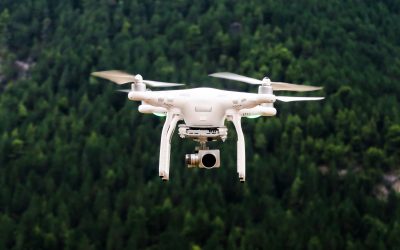
Japanese telecommunications giant KDDI Corporation announced on Monday that it will establish a nationwide network of 1,000 drone deployment sites across Japan, equipping each location with camera- and sensor-fitted unmanned aerial vehicles designed to respond rapidly to earthquakes and other natural disasters. The initiative, developed in partnership with U.S. drone manufacturer Skydio Inc., targets a response time of approximately 10 minutes to any location in Japan following a disaster event.
The programme represents a major step in Japan’s ongoing efforts to modernise its disaster management infrastructure, a priority for a country that experiences some of the world’s highest seismic activity. KDDI said it expects to complete the deployment of all 1,000 sites within three years. Among the planned host locations are outlets of Lawson Inc., Japan’s major convenience store chain — a sector under structural pressure as rival 7-Eleven has announced the closure of hundreds of stores across North America — in which KDDI is set to acquire a 50 percent ownership stake.
The two companies sealed a capital tie-up last week, with KDDI committing approximately ¥10 billion in investment to Skydio. The San Mateo-based drone maker has expanded aggressively on the back of rising U.S.-China tensions over economic security, as Japanese and Western companies seek alternatives to Chinese-manufactured UAVs that dominate the global market, led by Shenzhen-based DJI Technology Co. The investment reflects continued confidence in Japan’s technology sector even as the Bank of Japan weighs an interest rate increase that could raise borrowing costs for corporate expansion.
KDDI Managing Executive Officer Hiromichi Matsuda told reporters at a Tokyo press conference that the drones’ capacity to fly in complete darkness and detect heat signatures via temperature sensors makes them especially effective for locating survivors buried under collapsed structures. Beyond search-and-rescue operations, the network will support post-disaster inspection of roads, bridges, and other critical infrastructure, supplying aerial data that typically takes days to gather through ground-based methods.
Each drone is equipped with AI software capable of generating real-time three-dimensional terrain models and analysing video feeds autonomously, helping emergency coordinators identify areas of greatest need and allocate resources accordingly. The collaboration underscores a broader trend in Japan of integrating telecommunications networks with public safety systems, as the government looks to close gaps exposed by past disaster responses and ensure a faster, more data-driven reaction to future crises.


 Japan’s Skilled Worker Visa Suspension Raises Labor Shortage Fears Across Multiple Industries