

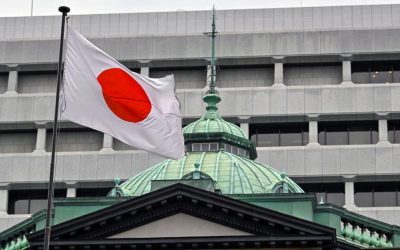
The Bank of Japan is widely expected to increase its benchmark policy interest rate at its June 15–16 monetary policy meeting, according to market analysts and a former BOJ board member, as the central bank faces mounting pressure to act before inflation expectations become entrenched. A June rate hike, if confirmed, would mark one of the most consequential policy decisions by the BOJ since it began its current tightening cycle.
The expectation of a June move follows an unusually divided BOJ board vote in late April, when six members voted to hold rates steady while three dissented in favour of an immediate increase — a degree of internal disagreement that analysts said signalled strong momentum for action at the next meeting. One board member publicly stated that a rate increase was “quite possible” at the June meeting even if uncertainty over the Middle East conflict persisted. That conflict has already disrupted Japanese shipping logistics, with Mitsui O.S.K. Lines awaiting government clearance to resume vessel movements through the Gulf, compounding upward pressure on Japan’s energy import costs.
Masahiro Kihara, chief executive of Mizuho Financial Group, one of Japan’s largest banking conglomerates, said he expects the central bank to raise rates in either June or July. Separately, a former BOJ board member cited in recent commentary said that waiting further risked falling behind the curve on inflation management, a concern that has gained urgency as Middle East tensions continue to exert upward pressure on energy and goods prices flowing through Japan’s import-dependent economy.
The BOJ’s April Summary of Opinions, released in May, reinforced the hawkish tilt, with multiple members expressing concern about upside inflation risks. Japan’s consumer price index has remained above the central bank’s 2 percent target, driven in part by higher energy costs, rising food prices, and a weak yen. The inflationary squeeze is already reshaping retail behaviour: discount retailer Seria has doubled down on its ¥100 price point even as competitors raise prices, a sign of how cost-sensitive Japanese consumers have become. The yen underperformed all Group-of-10 currencies in May despite record intervention expenditure by Japanese authorities.
A rate increase in June would test whether the BOJ can normalise monetary policy without disrupting Japan’s fragile economic recovery or triggering further yen volatility. Bond markets and equity investors will be closely watching Governor Kazuo Ueda’s post-decision press conference for guidance on the pace and scale of any subsequent moves, with some analysts raising the possibility of a larger-than-usual rate adjustment for the first time since 1990.


 KDDI to Deploy 1,000 Disaster-Response Drones Across Japan