

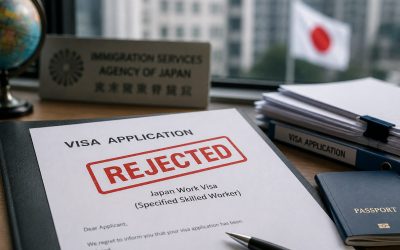
Japan’s suspension of new Specified Skilled Worker (SSW) visa processing is creating growing uncertainty for businesses across the country, raising concerns about labor shortages, economic sustainability, and Japan’s long-term competitiveness in attracting foreign talent.
The issue first emerged publicly in the restaurant sector, but industry analysts say the impact is likely to extend far beyond food services alone. Companies operating in hospitality, tourism, retail, manufacturing, agriculture, logistics, healthcare, construction, and elder care are all closely monitoring the situation as Japan continues to grapple with one of the world’s fastest-aging populations and a rapidly shrinking domestic workforce.
Related: Japan Launches Upgraded Trainee Program to Attract Foreign Workers
Why Japan Suspended Some Skilled Worker Visa Processing
Japan’s Immigration Services Agency reportedly suspended the issuance of new Certificates of Eligibility for certain Type I Specified Skilled Worker visa applications beginning April 13 after the number of foreign workers in the food service sector approached the government’s preset limit.
According to preliminary figures, the number of foreign workers holding Type I Specified Skilled Worker status in Japan’s food service industry had already reached approximately 46,000 by the end of February, placing the sector on track to exceed its fiscal 2028 cap of 50,000 workers.
The Type I Specified Skilled Worker visa allows foreign employees to work in Japan for up to five years in designated labor-shortage industries. However, holders of the visa are generally not permitted to bring family members to Japan. By contrast, the higher-level Type II visa category offers more flexible long-term residency options and allows workers to be accompanied by their families.
The sudden suspension has disrupted hiring pipelines for many Japanese businesses that had invested heavily in recruiting and training overseas talent.
Industries Beyond Restaurants Could Also Be Affected
Although the visa pause initially drew attention because of its impact on restaurant operators, labor experts say the broader implications could affect multiple sectors already facing severe worker shortages.
Over the past decade, Japan has increasingly relied on foreign workers to sustain daily operations in industries where domestic labor has become difficult to secure. Businesses in tourism, convenience retail, hotels, caregiving, transportation, warehousing, agriculture, and manufacturing have all expanded recruitment efforts overseas in response to persistent staffing shortages.
Many companies had been building long-term workforce strategies around the Specified Skilled Worker program, viewing it as one of the few practical solutions to Japan’s demographic challenges.
Now, employers fear that uncertainty surrounding visa approvals could delay expansion plans, reduce operating hours, increase overtime burdens on existing staff, and intensify competition for experienced workers already residing in Japan.
Companies Fear Losing Foreign Talent
Several Japanese businesses have expressed concern that foreign workers who had been preparing to transition into skilled employment roles may instead choose to leave Japan altogether.
Many employers have spent years supporting exchange students, trainees, and overseas recruits through Japanese language education, workplace adaptation programs, technical training, and visa preparation. Some companies were planning to promote foreign workers into long-term full-time positions after they gained additional experience and qualifications under Japan’s immigration system.
However, uncertainty surrounding visa availability now threatens those plans.
Industry observers warn that some foreign workers may decide to pursue opportunities in countries such as South Korea, Singapore, Canada, Australia, Germany, or Gulf states where immigration pathways are often viewed as more stable and predictable.
For many overseas workers, long-term clarity regarding residency, career growth, and family opportunities plays a major role when choosing where to work abroad. Sudden policy suspensions can therefore damage confidence in Japan’s labor market even if restrictions are later eased.
Impact on Foreign Students and Visa Applicants
The visa suspension is also creating anxiety among foreign students and technical trainees already living in Japan.
Many international students had hoped to transition from part-time employment into full-time skilled positions after graduation. Others were preparing for Specified Skilled Worker examinations in sectors facing labor shortages.
Now, some applicants fear their career pathways may be delayed or blocked entirely.
Immigration uncertainty may also discourage future applicants from considering Japan as a destination for work or study, particularly as global competition for younger skilled workers continues to intensify.
Rising Risk of Labor Competition and Worker Poaching
Some industry groups have warned that labor shortages could trigger more aggressive competition among employers for foreign workers who already possess valid visas or specialized experience.
Businesses facing staffing shortages may increasingly attempt to recruit workers away from competitors, particularly in sectors requiring Japanese language ability and customer-service skills. This could increase labor costs and contribute to workforce instability in industries already operating under financial pressure.
Customer-facing industries such as hospitality, retail, transportation, tourism, and food services are considered especially vulnerable because they require extensive cultural training, communication skills, and service-standard adaptation.
Replacing trained workers in these industries is often both expensive and time-consuming.
Why Foreign Workers Have Become Essential to Japan’s Economy
Japan’s labor shortage problem is closely tied to broader demographic trends.
The country has one of the oldest populations in the world, while its birthrate continues to decline. As more Japanese workers retire and fewer younger workers enter the labor force, businesses across multiple industries are struggling to maintain adequate staffing levels.
Foreign workers are increasingly viewed by many employers not simply as supplemental labor, but as an essential component of Japan’s long-term economic sustainability.
Without additional workforce participation, some analysts warn that businesses may face reduced productivity, slower expansion, declining regional services, and mounting pressure on industries critical to everyday economic activity.
Debate Over Immigration Policy and Domestic Hiring
Business organizations are expected to push for higher visa caps and more flexible immigration policies in response to worsening labor shortages.
At the same time, government officials continue to argue that companies must first strengthen efforts to recruit domestic workers before expanding reliance on foreign labor. Policymakers remain cautious about rapidly broadening immigration programs without wider structural reforms related to wages, productivity, automation, and regional employment conditions.
The debate reflects a larger policy dilemma facing modern Japan: balancing economic necessity with long-standing political caution surrounding immigration expansion.
A Critical Test for Japan’s Future Workforce Strategy
For businesses across Japan, the current visa suspension represents more than a temporary administrative adjustment. It has become a broader test of how the country intends to manage labor shortages in the coming decades.
As Japan’s population continues to age and workforce pressures intensify, the ability to attract, train, and retain foreign workers may play an increasingly important role in determining the country’s economic resilience and global competitiveness.
How policymakers respond in the months ahead could shape not only the future of Japan’s immigration system, but also the long-term stability of industries that now depend heavily on international talent.


 Japan’s Labor Shortage Turns Diplomatic as Regions Race to Secure Foreign Workers